How to communicate with a person with dementia: what actually works
Communication changes with dementia, but connection doesn't have to be lost. Discover techniques that strengthen the bond and reduce frustration for everyone.
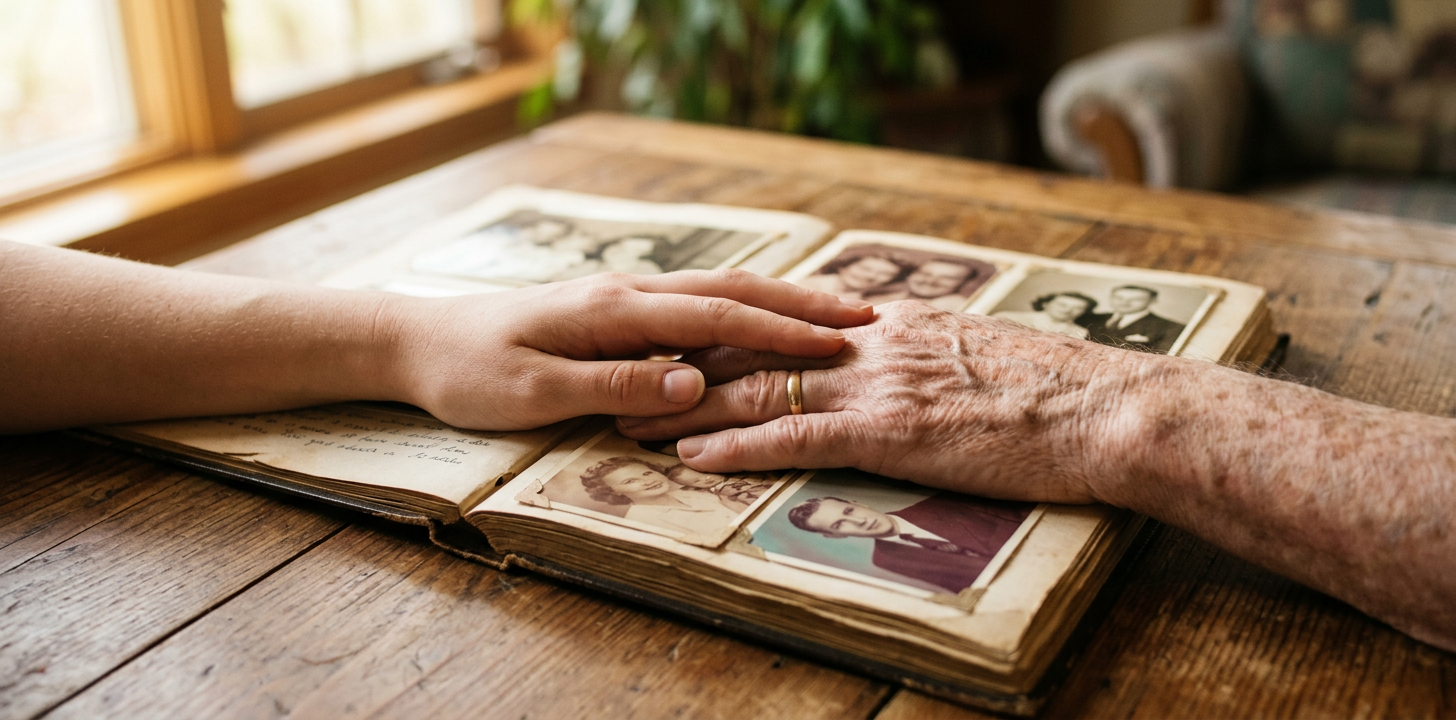
One of the most painful experiences for families facing dementia is feeling that communication with their loved one is slipping away. Words get confused, conversations become difficult, and frustration grows on both sides.
But here is something important we need to understand: communication is much more than words. Even when verbal language deteriorates, the ability to feel, connect, and respond emotionally remains intact throughout much of the disease.
Key insight: People with dementia may lose the ability to find the right words, but they retain the ability to feel tone, intention, and emotion behind every interaction. Your loving presence communicates more than you imagine.
Why communication changes
Dementia affects the areas of the brain responsible for language and information processing. This can manifest in different ways depending on the stage:
- Early stage: difficulty finding the right word, repeating stories or questions, losing the thread of a conversation
- Middle stage: more limited vocabulary, difficulty following long conversations, confusion with abstract concepts
- Advanced stage: few words or phrases, greater reliance on nonverbal communication, emotional responses to tones and gestures
Understanding these changes is not a reason for despair. On the contrary, it allows us to adapt the way we communicate to maintain connection at every stage.
What DOES work
Speak slowly and use short sentences
A brain affected by dementia needs more time to process information. Use simple, direct sentences. Instead of "How about we go out to the garden and sit for a while because it's such a beautiful day?", try: "Let's go to the garden. It's a beautiful day."
Make eye contact and use their name
Before speaking, make sure they are looking at you. Get down to their level, make gentle eye contact, and use their name at the beginning of the sentence. This helps them focus and understand that you are speaking directly to them.
Offer concrete choices, not open questions
Open-ended questions like "What do you want to eat?" can be overwhelming. It is easier to answer "Would you like chicken or fish?" Limit choices to two, and if possible, show what you are describing to make it easier to understand.
Listen with patience and without interrupting
Give them time to respond. Silence does not mean they don't understand; they may be processing. Resist the temptation to finish their sentences or correct them. What matters most is not that they say the right words, but that they feel heard.
Use body language to your advantage
Facial expressions, gestures, and tone of voice communicate as much or more than words. Smile, nod, gently touch their hand. Your body can convey safety, warmth, and calm even when words fail.
Validate instead of correcting
If your loved one says something that isn't correct, don't correct them. Correcting generates frustration and shame. If they say "I want to go see my mom" (even though she has passed away), respond to the emotion: "You miss your mom. Tell me something nice about her." This honors their feelings without creating confusion.
Lean on music and memories
Music has a unique power in dementia. Songs from their youth can activate memories and emotions that words cannot reach. Sing together, listen to music they enjoy, look at old photos. These shared experiences create moments of deep connection.
Keep a calm environment
Background noise, television, multiple people talking at once... all of this makes communication harder. When you want to have a meaningful conversation, find a quiet place, reduce distractions, and give your full attention.
What does NOT work
Just as important as knowing what to do is understanding what to avoid. These are the practices that tend to make communication worse:
- Correcting or contradicting: "No, that's not how it happened" generates frustration and shame
- Memory tests: "Do you remember who I am?" causes anxiety
- Talking about the person as if they weren't there: always include them in the conversation
- Using sarcasm or irony: the ability to interpret these nuances is lost
- Rushing responses: time pressure increases confusion
- Reasoning or arguing: logic doesn't work the same way; connect with emotion instead
A person with dementia may forget what you said, but they will never forget how you made them feel.
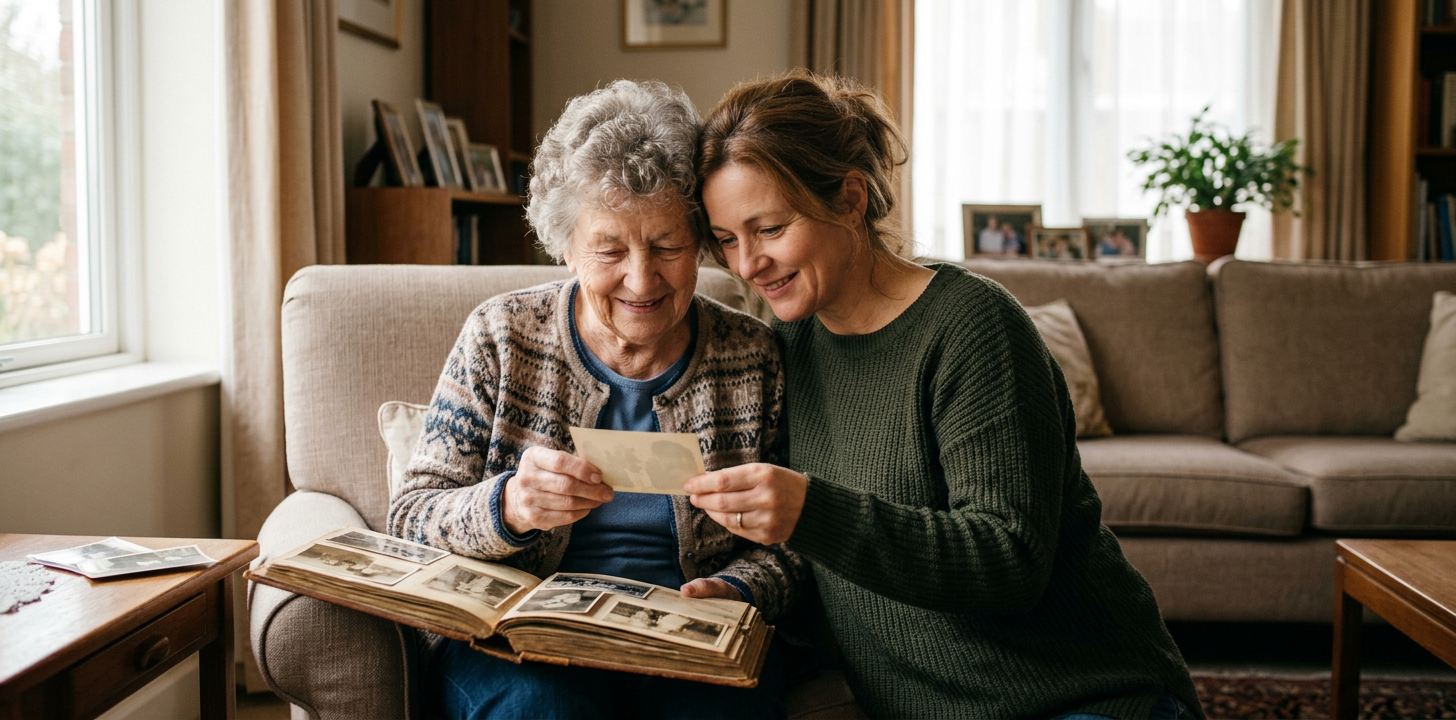
Communication in advanced stages
When words become scarce or disappear entirely, nonverbal communication becomes the primary channel. In these stages:
- Touch is powerful: holding their hand, stroking their hair, a gentle hug can communicate more than a thousand words
- Your tone of voice matters more than ever: speak with softness and warmth, even if they don't respond verbally
- Presence is enough: you don't need to fill the silence. Simply being there, sitting together, is an act of deep love
- Observe expressions: a smile, a hand squeeze, a shift in their gaze are forms of communication that deserve to be recognized and celebrated
A path you don't have to walk alone
Learning to communicate in a new way with your loved one is a process. There will be good days and difficult days. What matters is remembering that every attempt at connection has value, even when it doesn't go perfectly.
At BehaCare, our team of dementia specialists can teach you communication techniques adapted to your loved one's specific stage. Through our telehealth sessions, we work with you so that every interaction becomes more meaningful and less frustrating.
Remember: Human connection transcends words. As long as there is love, there is communication. And there are always ways to improve that connection with the right tools.